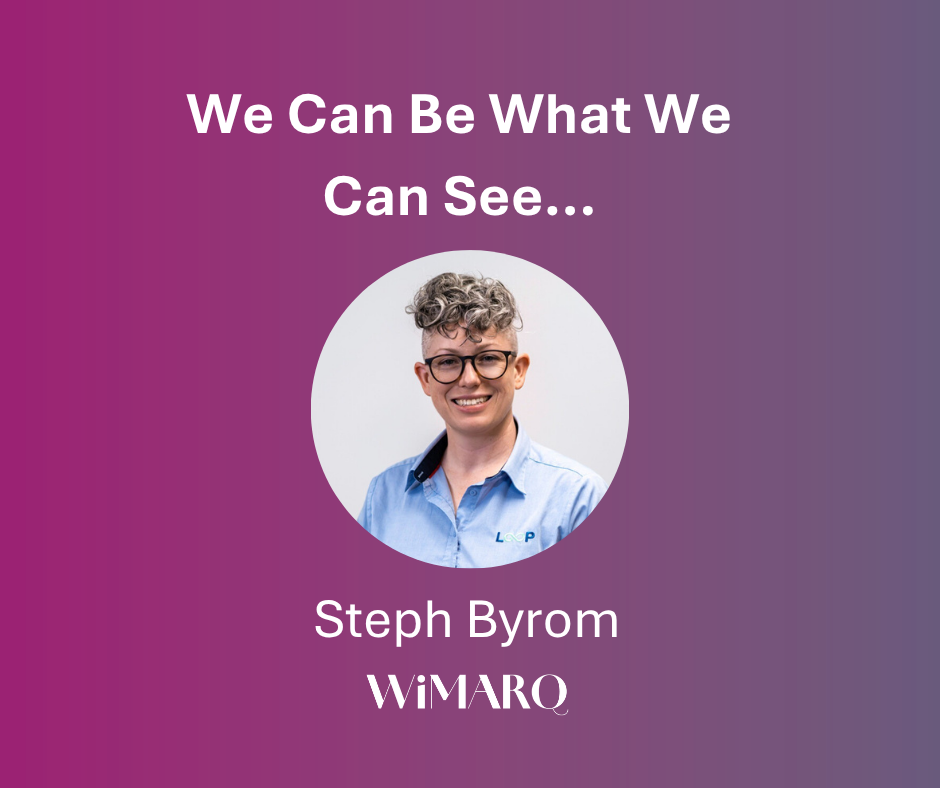
Different thinking for a changing industry
Steph grew up around mining.
A third-generation miner, with both parents and her maternal grandfather working in the industry, resources was never something distant or abstract. It was part of the fabric of her life.
Yet her pathway into the sector was anything but traditional.
Rather than studying engineering or geology, Steph pursued developmental politics before later specialising in systems thinking. She became fascinated by the intersection of economic development, energy reliability and climate action, and the complex systems that sit behind them.
For Steph, mining became the place where those challenges converged.
“What really drew me in was the opportunity to work on big, complex systems that matter.”
She saw an industry that supplies the materials the world depends on, supports regional communities, and now sits at the centre of one of the most significant transformations of our time.
“Mining became the place where I could have real impact — not by talking about transition from the outside, but by working inside the system to help make it safer, smarter and more sustainable.”
Turning strategy into action
A defining moment in Steph’s career came when she moved from policy and strategy into the practical realities of decarbonisation delivery.
Understanding emissions frameworks and climate policy is one challenge. Delivering emissions reduction in live mining operations, while balancing production, safety, regulatory requirements and commercial realities, is another entirely.
“It is one thing to understand policy settings. It is another thing entirely to make decarbonisation work in a live mining environment.”
Steph is most proud of helping transform complex decarbonisation challenges into practical pathways for industry, including work on methane abatement, energy integration and first-of-kind approaches to reducing fugitive emissions in open-cut coal operations.
The experience reinforced a belief that now underpins much of her leadership philosophy.
“We are not going to solve new problems with the same thinking and operating philosophies that created or maintained them.”
Why difference matters
Throughout her career, Steph has often approached problems from outside traditional mining pathways.
As a systems thinking professional working across strategic risk, decarbonisation and energy transition, she has learned that some of the industry’s most complex challenges cannot be solved through a single discipline alone.
That perspective is also informed by lived experience.
As a proud gay woman and a neurodivergent professional, Steph understands what it can feel like to navigate environments where parts of yourself may not always feel safe to share.
“I understand what it can feel like to assess a room before deciding how much of yourself is safe to show.”
While mining has made significant progress, she believes the industry still has work to do to ensure inclusion is experienced consistently, not just described in policy.
“Some people and organisations have made me feel genuinely respected, valued and safe. Others have reminded me that inclusion cannot be assumed simply because the right language appears in a policy.”
These experiences have strengthened her belief that diversity is not solely a social issue. It is a capability issue. “Diversity of thought is not a nice-to-have. It is a technical and strategic necessity. Diversity in people gives us diversity in thinking, which can change how we solve problems”
The connection between cultural and psychological safety
For Steph, psychological safety is often discussed in terms of whether people feel comfortable speaking up, contributing ideas or challenging assumptions.
Cultural safety goes further.
It asks whether people feel respected for who they are, how they think, how they learn and the experiences they bring with them.
“Psychological safety is about whether people feel safe to contribute. Cultural safety asks whether the environment itself respects who people are.”
This distinction matters because inclusion cannot simply rely on individuals being brave enough to speak up.
The workplace itself must create conditions where people can participate fully without fear of judgement, exclusion or professional consequence.
“Bringing your whole self to work only works if the workplace has done the work to make that safe.”
For Steph, the ultimate goal is not that everyone must disclose every aspect of themselves at work.
The goal is choice.
“People should not have to hide who they are to be respected, promoted, listened to or protected.”
Representation beyond visibility
The phrase “you can’t be what you can’t see” is central to this series, and Steph agrees visibility matters.
She reflects that earlier in her career it would have made a difference to see more leaders who were openly gay, neurodivergent, female and leading in highly technical environments.
However, she believes representation must go beyond showcasing success stories.
“It is not enough to profile diverse people once they have already succeeded. We need to make the pathways visible too.”
That means telling stories about non-linear careers, career changes, different learning styles, varied technical backgrounds and unconventional leadership journeys.
It also means recognising that visibility can sometimes come with risk.
“Representation needs to be backed by genuine cultural change, not just storytelling.”
Her perspective challenges organisations to think beyond symbolic representation and focus on creating workplaces where people can genuinely thrive.
Inclusion as an operating discipline
Steph believes the resources sector has reached a point where inclusion can no longer sit on the margins of organisational strategy.
“Leaders need to move inclusion from intention to operating discipline.”
She argues that psychosocial risks should be treated with the same rigour as physical safety risks, through prevention, accountability, measurement and system design.
Creating safer workplaces, she says, requires organisations to look honestly at who gets heard, who gets developed, who carries the burden of adaptation, and who is expected to fit existing norms.
It also means recognising the value of different ways of thinking.
“For neurodivergent people, inclusion can be as practical as clearer expectations, reduced ambiguity and recognising that communication style does not equal capability.”
This focus on systems, rather than individual behaviour alone, reflects the same mindset Steph applies to decarbonisation and operational improvement.
The challenge is not simply changing people. It is changing conditions.
Leadership through mentorship and advocacy
Although Steph has benefited from mentors throughout her career, she notes that they have not always come through formal programs.
Her career has crossed operations, strategy, commercial problem-solving, industry transformation and decarbonisation, making it difficult to find a single mentor who understood every aspect of her work.
Instead, she sought different people for different challenges.
“Some helped me understand technical issues. Others helped me navigate leadership, commercial decisions or moments where I needed perspective.”
Today, she mentors emerging professionals herself and describes it as one of the more rewarding aspects of her career.
“For me, mentoring is not about having all the answers. It is about being generous with experience and helping make the pathway a little less lonely for the next person.”
What she would tell the next generation
When asked what advice she would give to those entering the industry, Steph’s answer is simple.
“You do not need to become someone else to be successful here.”
She encourages people not to undervalue non-traditional backgrounds and reminds them that mining’s future challenges will require expertise far beyond traditional technical disciplines.
The industry needs engineers and operators, but it also needs people who understand systems, sustainability, technology, policy, communities and change.
Most importantly, she encourages people to find mentors and peers who recognise their capability without requiring them to shrink themselves to fit someone else’s expectations.
“Belonging should not require self-erasure.”
We can be what we can see
Steph’s story is a reminder that the future of mining depends not only on new technologies, but on new ways of thinking.
Her journey demonstrates the value of diverse perspectives, lived experience and non-traditional pathways in solving increasingly complex industry challenges.
As mining navigates the energy transition, technological change and evolving community expectations, the sector will need people who can connect disciplines, challenge assumptions and approach problems differently.
The future will not be built by sameness.
It will be shaped by people whose varied experiences allow them to see possibilities others might miss.
Because representation is not simply about who is visible.
It is about expanding what the industry believes is possible.


 The connection between cultural and psychological safety
For Steph, psychological safety is often discussed in terms of whether people feel comfortable speaking up, contributing ideas or challenging assumptions.
Cultural safety goes further.
It asks whether people feel respected for who they are, how they think, how they learn and the experiences they bring with them.
“Psychological safety is about whether people feel safe to contribute. Cultural safety asks whether the environment itself respects who people are.”
This distinction matters because inclusion cannot simply rely on individuals being brave enough to speak up.
The workplace itself must create conditions where people can participate fully without fear of judgement, exclusion or professional consequence.
“Bringing your whole self to work only works if the workplace has done the work to make that safe.”
For Steph, the ultimate goal is not that everyone must disclose every aspect of themselves at work.
The goal is choice.
“People should not have to hide who they are to be respected, promoted, listened to or protected.”
Representation beyond visibility
The phrase “you can’t be what you can’t see” is central to this series, and Steph agrees visibility matters.
She reflects that earlier in her career it would have made a difference to see more leaders who were openly gay, neurodivergent, female and leading in highly technical environments.
However, she believes representation must go beyond showcasing success stories.
“It is not enough to profile diverse people once they have already succeeded. We need to make the pathways visible too.”
That means telling stories about non-linear careers, career changes, different learning styles, varied technical backgrounds and unconventional leadership journeys.
It also means recognising that visibility can sometimes come with risk.
“Representation needs to be backed by genuine cultural change, not just storytelling.”
Her perspective challenges organisations to think beyond symbolic representation and focus on creating workplaces where people can genuinely thrive.
The connection between cultural and psychological safety
For Steph, psychological safety is often discussed in terms of whether people feel comfortable speaking up, contributing ideas or challenging assumptions.
Cultural safety goes further.
It asks whether people feel respected for who they are, how they think, how they learn and the experiences they bring with them.
“Psychological safety is about whether people feel safe to contribute. Cultural safety asks whether the environment itself respects who people are.”
This distinction matters because inclusion cannot simply rely on individuals being brave enough to speak up.
The workplace itself must create conditions where people can participate fully without fear of judgement, exclusion or professional consequence.
“Bringing your whole self to work only works if the workplace has done the work to make that safe.”
For Steph, the ultimate goal is not that everyone must disclose every aspect of themselves at work.
The goal is choice.
“People should not have to hide who they are to be respected, promoted, listened to or protected.”
Representation beyond visibility
The phrase “you can’t be what you can’t see” is central to this series, and Steph agrees visibility matters.
She reflects that earlier in her career it would have made a difference to see more leaders who were openly gay, neurodivergent, female and leading in highly technical environments.
However, she believes representation must go beyond showcasing success stories.
“It is not enough to profile diverse people once they have already succeeded. We need to make the pathways visible too.”
That means telling stories about non-linear careers, career changes, different learning styles, varied technical backgrounds and unconventional leadership journeys.
It also means recognising that visibility can sometimes come with risk.
“Representation needs to be backed by genuine cultural change, not just storytelling.”
Her perspective challenges organisations to think beyond symbolic representation and focus on creating workplaces where people can genuinely thrive.
 Inclusion as an operating discipline
Steph believes the resources sector has reached a point where inclusion can no longer sit on the margins of organisational strategy.
“Leaders need to move inclusion from intention to operating discipline.”
She argues that psychosocial risks should be treated with the same rigour as physical safety risks, through prevention, accountability, measurement and system design.
Creating safer workplaces, she says, requires organisations to look honestly at who gets heard, who gets developed, who carries the burden of adaptation, and who is expected to fit existing norms.
It also means recognising the value of different ways of thinking.
“For neurodivergent people, inclusion can be as practical as clearer expectations, reduced ambiguity and recognising that communication style does not equal capability.”
This focus on systems, rather than individual behaviour alone, reflects the same mindset Steph applies to decarbonisation and operational improvement.
The challenge is not simply changing people. It is changing conditions.
Leadership through mentorship and advocacy
Although Steph has benefited from mentors throughout her career, she notes that they have not always come through formal programs.
Her career has crossed operations, strategy, commercial problem-solving, industry transformation and decarbonisation, making it difficult to find a single mentor who understood every aspect of her work.
Instead, she sought different people for different challenges.
“Some helped me understand technical issues. Others helped me navigate leadership, commercial decisions or moments where I needed perspective.”
Today, she mentors emerging professionals herself and describes it as one of the more rewarding aspects of her career.
“For me, mentoring is not about having all the answers. It is about being generous with experience and helping make the pathway a little less lonely for the next person.”
Inclusion as an operating discipline
Steph believes the resources sector has reached a point where inclusion can no longer sit on the margins of organisational strategy.
“Leaders need to move inclusion from intention to operating discipline.”
She argues that psychosocial risks should be treated with the same rigour as physical safety risks, through prevention, accountability, measurement and system design.
Creating safer workplaces, she says, requires organisations to look honestly at who gets heard, who gets developed, who carries the burden of adaptation, and who is expected to fit existing norms.
It also means recognising the value of different ways of thinking.
“For neurodivergent people, inclusion can be as practical as clearer expectations, reduced ambiguity and recognising that communication style does not equal capability.”
This focus on systems, rather than individual behaviour alone, reflects the same mindset Steph applies to decarbonisation and operational improvement.
The challenge is not simply changing people. It is changing conditions.
Leadership through mentorship and advocacy
Although Steph has benefited from mentors throughout her career, she notes that they have not always come through formal programs.
Her career has crossed operations, strategy, commercial problem-solving, industry transformation and decarbonisation, making it difficult to find a single mentor who understood every aspect of her work.
Instead, she sought different people for different challenges.
“Some helped me understand technical issues. Others helped me navigate leadership, commercial decisions or moments where I needed perspective.”
Today, she mentors emerging professionals herself and describes it as one of the more rewarding aspects of her career.
“For me, mentoring is not about having all the answers. It is about being generous with experience and helping make the pathway a little less lonely for the next person.”
 What she would tell the next generation
When asked what advice she would give to those entering the industry, Steph’s answer is simple.
“You do not need to become someone else to be successful here.”
She encourages people not to undervalue non-traditional backgrounds and reminds them that mining’s future challenges will require expertise far beyond traditional technical disciplines.
The industry needs engineers and operators, but it also needs people who understand systems, sustainability, technology, policy, communities and change.
Most importantly, she encourages people to find mentors and peers who recognise their capability without requiring them to shrink themselves to fit someone else’s expectations.
“Belonging should not require self-erasure.”
We can be what we can see
Steph’s story is a reminder that the future of mining depends not only on new technologies, but on new ways of thinking.
Her journey demonstrates the value of diverse perspectives, lived experience and non-traditional pathways in solving increasingly complex industry challenges.
As mining navigates the energy transition, technological change and evolving community expectations, the sector will need people who can connect disciplines, challenge assumptions and approach problems differently.
The future will not be built by sameness.
It will be shaped by people whose varied experiences allow them to see possibilities others might miss.
Because representation is not simply about who is visible.
It is about expanding what the industry believes is possible.
What she would tell the next generation
When asked what advice she would give to those entering the industry, Steph’s answer is simple.
“You do not need to become someone else to be successful here.”
She encourages people not to undervalue non-traditional backgrounds and reminds them that mining’s future challenges will require expertise far beyond traditional technical disciplines.
The industry needs engineers and operators, but it also needs people who understand systems, sustainability, technology, policy, communities and change.
Most importantly, she encourages people to find mentors and peers who recognise their capability without requiring them to shrink themselves to fit someone else’s expectations.
“Belonging should not require self-erasure.”
We can be what we can see
Steph’s story is a reminder that the future of mining depends not only on new technologies, but on new ways of thinking.
Her journey demonstrates the value of diverse perspectives, lived experience and non-traditional pathways in solving increasingly complex industry challenges.
As mining navigates the energy transition, technological change and evolving community expectations, the sector will need people who can connect disciplines, challenge assumptions and approach problems differently.
The future will not be built by sameness.
It will be shaped by people whose varied experiences allow them to see possibilities others might miss.
Because representation is not simply about who is visible.
It is about expanding what the industry believes is possible.